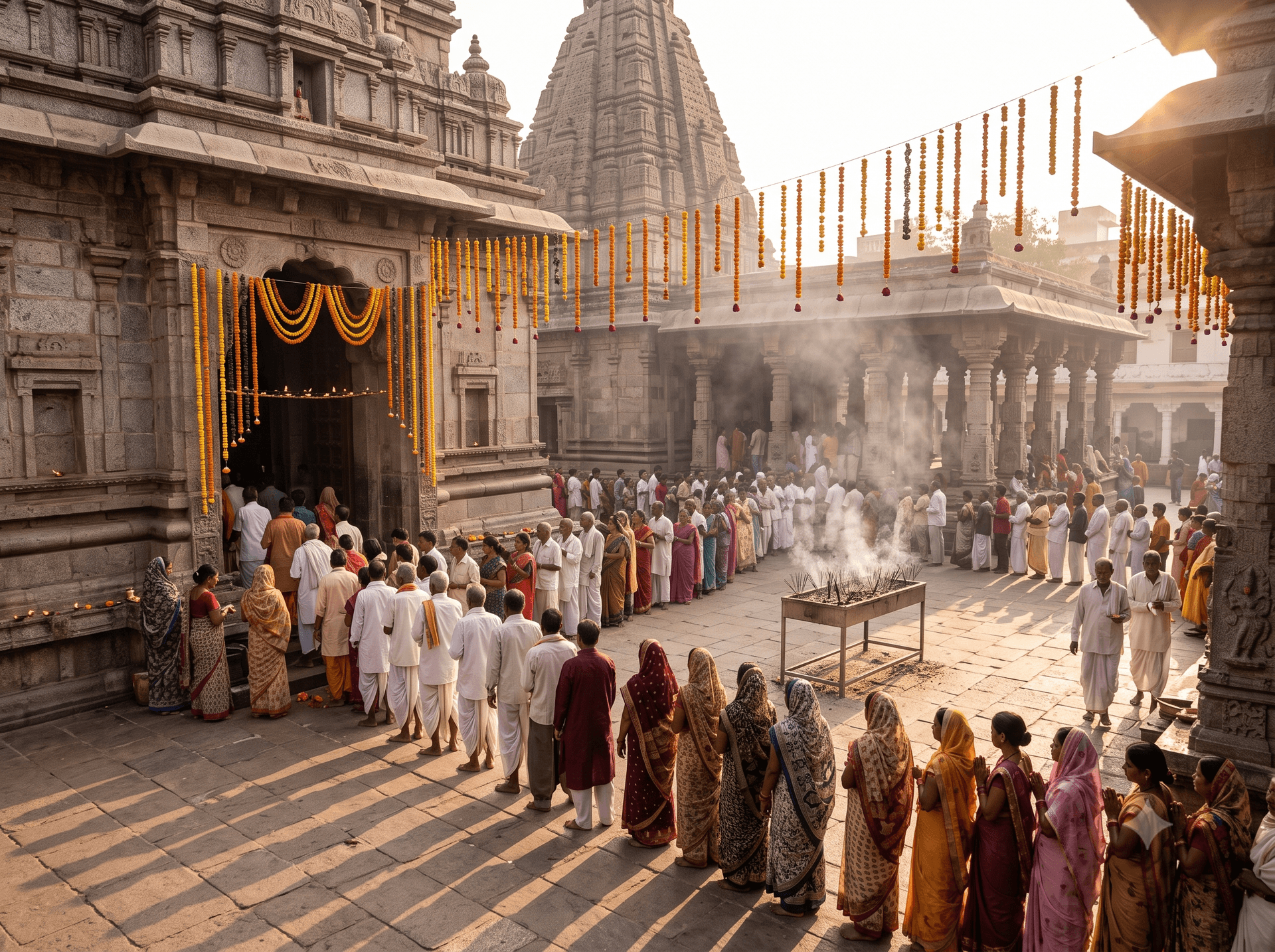
Shraddh ceremonies follow the lunar calendar, and choosing the right tithi is one of the first and most important planning decisions a family makes.
The Pitru Paksha fortnight is the most widely observed window, but many families also perform Shraddh on the specific tithi that matches their ancestor's passing, so it is worth checking both options with your priest.
Once a date is set, confirm the local temple schedule early — peak periods can book up quickly, and having a fixed date lets you plan travel and family attendance with confidence.
Fasting windows before the ceremony vary by family tradition, so use the planning call with your pandit to align expectations across everyone attending.
A simple shared calendar with the date, arrival time, and fasting guidance helps keep extended family coordinated without last-minute confusion.